
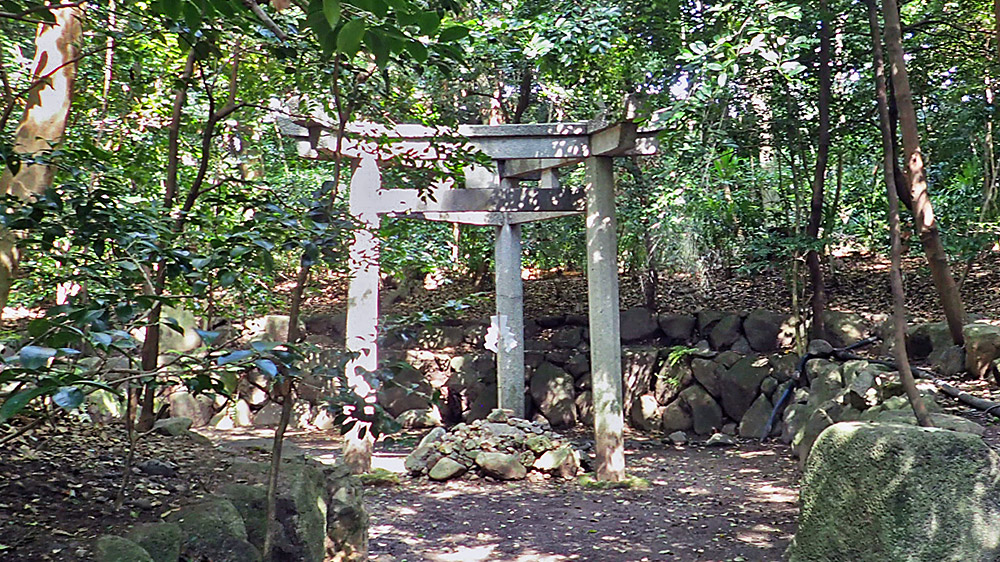
【Yokai & Mystery】 Kaikonoyashiro shirine(Kyoto pref.)

The Kaikonoyashiro Shrine was established during the reign of Empress Suiko (604 AD) in conjunction with the founding of Koryu-ji Temple.
Uzumasa, where this shrine is located (famous for its film studios), was originally a place developed by the Hata clan, a clan of immigrant origin. The shrine's name likely reflects the sericulture industry introduced by the Hata clan.
I visited this place on a day in early summer and indulged in some daydreaming about the connection between sericulture and this shrine with its three pillars!
(Nihedon @ KesaranPasaran Lab)
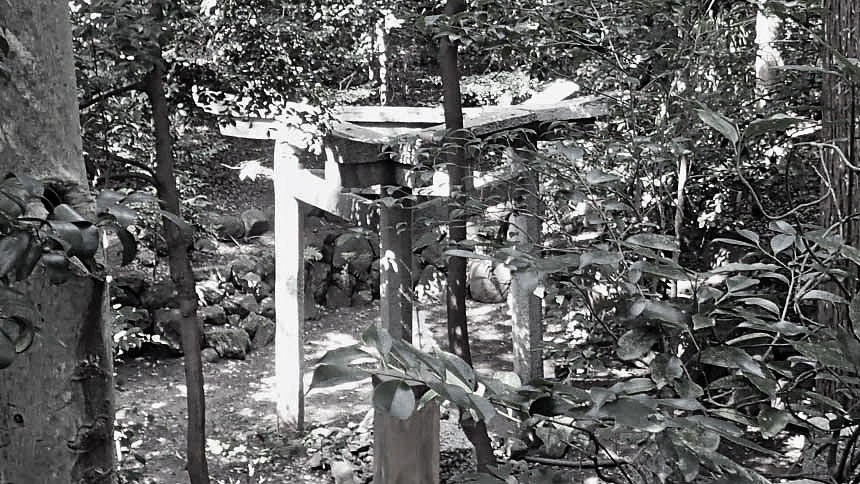
If you look at it from above, you can see that vertical columns extend from each vertex of the 'TRIANGLE'.
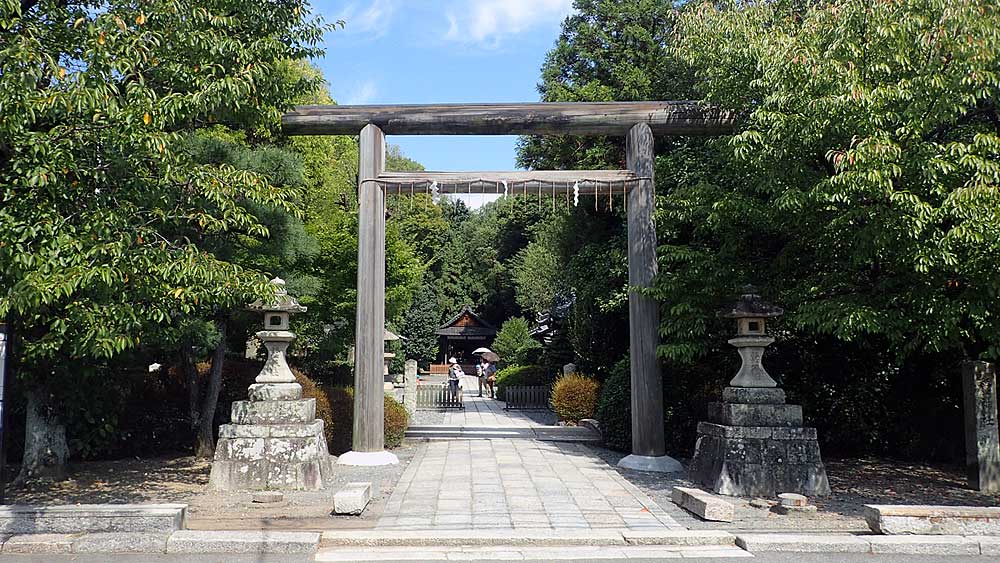
The deities enshrined at Konosha Shrine are Amenominakanushi-no-kami, Okunitama-no-kami, Hohodemi-no-mikoto, Ugayafukiaezu-no-mikoto, and Ninigi-no-mikoto.
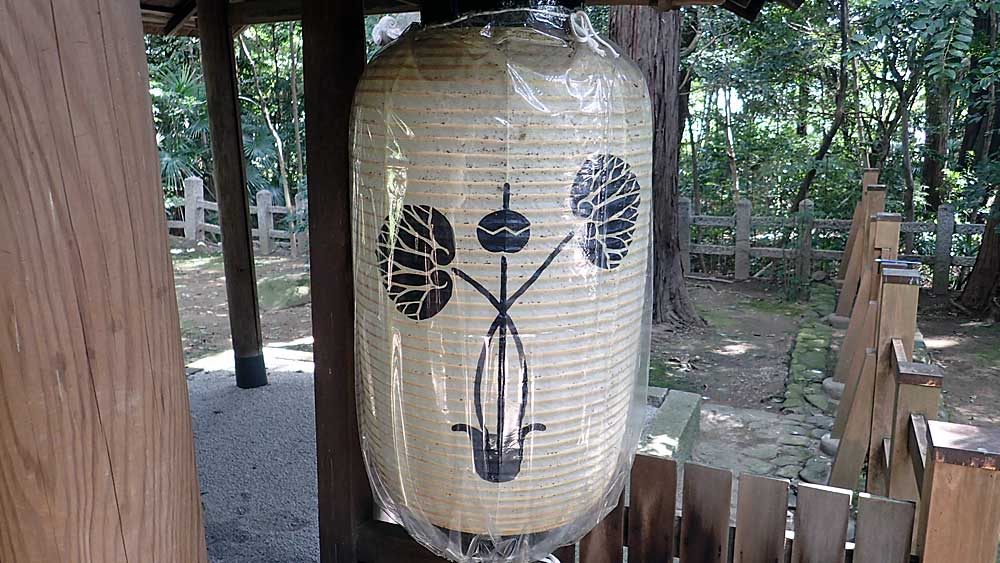
The design on the lantern in the temple grounds looks more like a poppy than a mulberry. Is it related to ancient Japanese hemp culture?
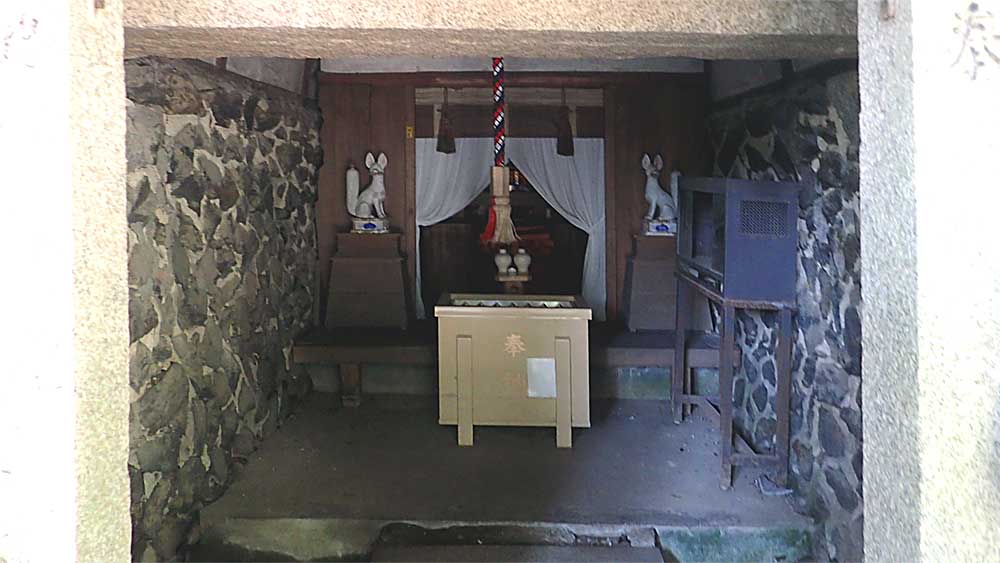
A cave-like place within the temple grounds. Is it meant to represent a place where silkworms live? Or is it a place where one receives divine revelations?
While it's unclear whether the Hata clan actually used hemp in their religious ceremonies, let's assume they performed rituals involving hemp, either for prayers to the gods to create sacred silk cloth, or to make the silk cloth appear more sacred and thus more mystical.
Imagine, then, to more realistically "embodied" this "communication with the gods," sitting in the center of this "three-pillar torii gate," meditating while gazing up at the sky.
When you enter the center of the three-pillar torii gate and look up at the sky, the sky appears as if it's been cut into a triangle, which I think easily creates a rather mystical image.
To summarize these points:
1. The Hata clan awakened their consciousness with hemp and used the three-pillared torii gate to communicate with the heavens and receive divine oracles. Or, they made the people believe this.
2. The Hata clan used the three-pillared torii gate as a symbol of "sericulture," a "divinely inspired undertaking."
3. Using this symbol, the "three-pillared torii gate," they conveyed to the people that "the technology of making silk" was also a "gift from the heavens," and attempted to rule the land through this belief.
Couldn't you consider it that way? Well, these are just ideas that came to me while I was heavily drinking in Kyoto at night, so there's no historical basis for them.
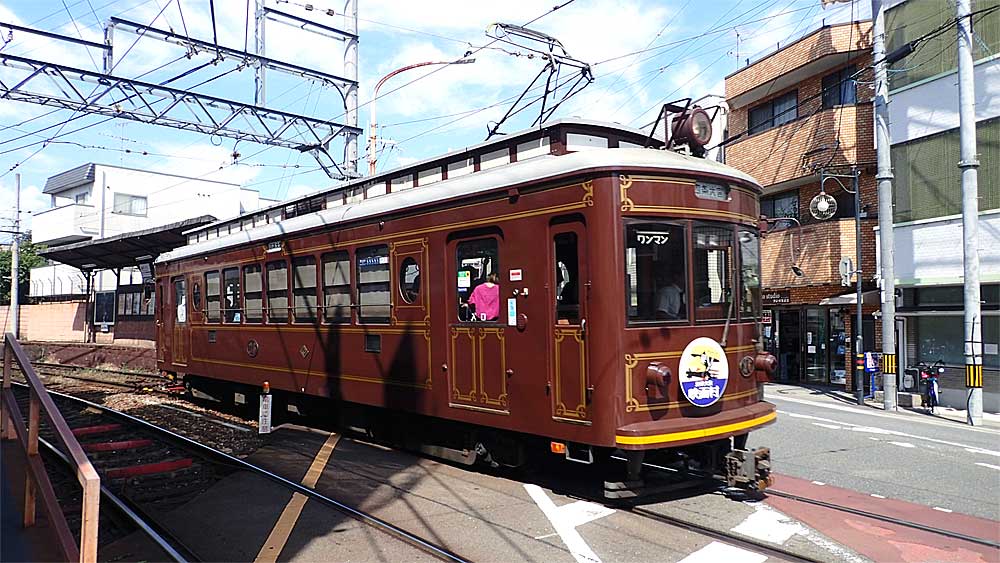
The Randen streetcar runs right next to the shrine. Its colors are really nice and blend well with the Kyoto cityscape.
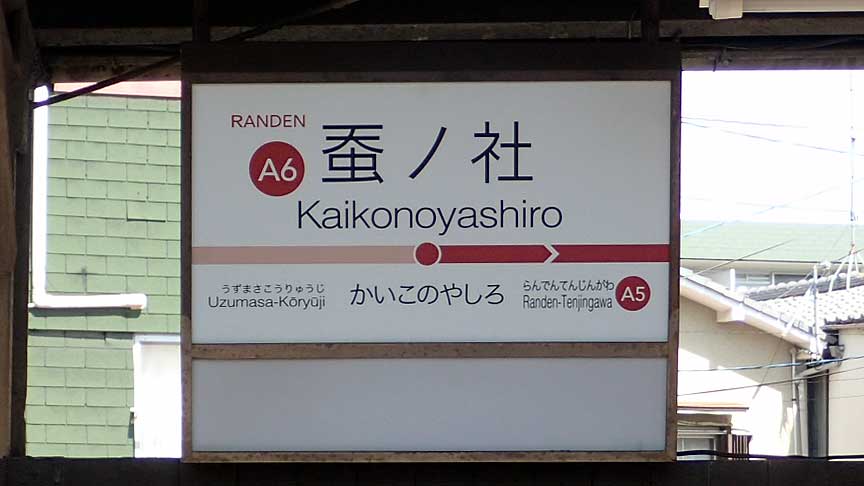
The fact that they've used the shrine's name as the station name shows just how deeply rooted it is in the local community.
ACCESS : 5-minute walk from "Keifuku Electric Railway Arashiyama Main Line" Kaikonoyashiro Station